 |
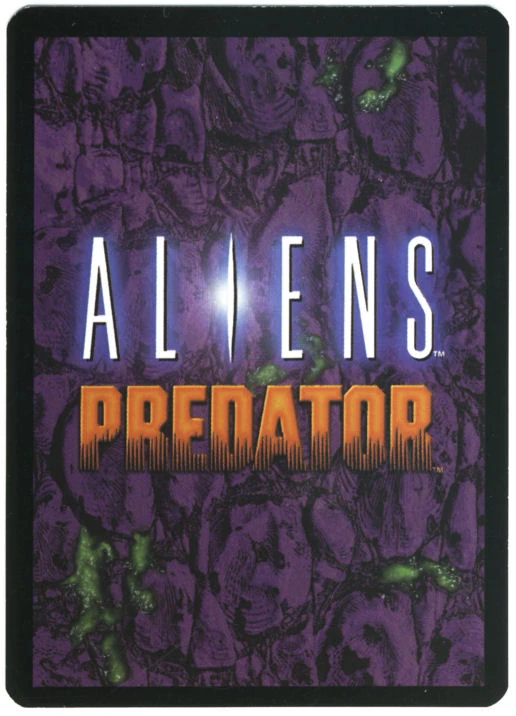
| An Aliens Predator card back, with the name of the game over a dark purple background. |
I first found this game as a child in my local card game store - Dave's Doug Out, on San Pablo Avenue. It was bigger and brighter than the other card store, Cosmic Cards and Comics on Solano, so I spent more time at Dave's.
It was 1997 and I saw a display that said Aliens Predator on it. At this point I hadn't seen any of the movies, but delighted on stories from friends who had, and the wildly unrestrained Kenner line of toys.
My first experience with either franchise were the toys, which came with mini comics. They were colorful and action packed, so I loved them and had no context to put them in. That laid the foundation for my love of both series - an unrestrained universe full of color, creativity, dynamism, and pulp styling.
So I bought two starter decks on name recognition alone. I got the Marine and Alien starter set, because I heard a lot more about Aliens than Predator. This was at a time where I would buy starter decks and not actually learn the game - usually because no one else would pick up the game, and I didn't understand the rules enough to teach it to my friends. Other games that followed this example: Star Wars, Babylon 5, and Pokemon.
I got super excited about Aliens Predator because it had pictures that looked exciting and a tense atmosphere - Aliens were out there! They were gonna get ya!
But the rules were very complicated for my kiddo self. I remember gushing about the game to a friend, and they asked how to win, and I *had no idea* because that was at the end of the rulebook in a tiny chapter that says to refer to the scenario being played for victory conditions. I didn't even know there were scenarios!
The game is wildly different from the other CCGs I've experienced because it operates much more like a tactical board game than like Magic: The Gathering or Yu Gi Oh!. Players lay out Location cards and move characters between them, searching for equipment or weapons or victims. Lots of the cards have specific context requirements to play rather than a cost system or limited plays like other games. And most different, the game does not work without a Scenario governing the rules of the game.
All of these combined to make the game difficult to learn, and more difficult to teach. I ended up not playing the game until 20 years later when this revival project started with Dune. I got three starter decks off of Ebay, and I still have my rulebook from 1997. I've played two matches so far using the 'Contact' scenario, and the problems we ran into indicate that this one is going to take a lot more work than Dune will to get table-ready.
I'm excited :)

No comments:
Post a Comment